Our Office
5909 South Congress Ave
Lake Worth, FL 33462
Existing Patients: (561) 967-6453
New Patients: (561) 203-0359
Emergency: (754) 800-1949
Fax: (561) 431-5866
Visit Us Online

At Horizon Palms Family Dentistry, we combine modern materials and thoughtful technique to restore teeth with results that look natural and function reliably. Our team keeps current with advances in restorative dentistry so patients receive care that balances longevity, comfort, and appearance.
Tooth enamel is the body’s hardest substance, yet teeth remain vulnerable to decay, fractures, and wear. Small cavities can often be repaired with dental fillings, but when damage affects most of a tooth’s structure, a full-coverage solution is usually the better option. In those cases, a crown rebuilds the tooth’s shape, protects remaining enamel, and restores chewing function.
All-ceramic crowns have become the leading choice for patients who want a metal-free restoration that blends with the surrounding teeth. Advances in ceramic materials give us restorations that are strong, stain-resistant, and highly aesthetic—making it possible to preserve natural-looking smiles without compromising strength.
Patient comfort, clear communication, and predictable outcomes guide every treatment plan we recommend. Our office evaluates each smile individually to select a crown material and design that meet functional needs and cosmetic goals.
A crown becomes necessary whenever a tooth no longer has enough healthy structure to support a filling or when appearance and function need comprehensive restoration. We weigh factors such as remaining tooth material, bite forces, and the tooth’s location to determine if a crown will provide a longer-lasting result than alternative repairs.
Common reasons to place a crown include large fractures, extensive decay that weakens the tooth, a failed or oversized filling, and teeth that require full coverage following root canal treatment. Crowns are also the standard restoration to attach to implants and to anchor a conventional bridge when replacing missing teeth.
Choosing a crown is a conservative choice when compared with extraction and replacement; it preserves the natural tooth root and helps maintain normal bite relationships and jawbone health. Our approach focuses on restoring strength and protecting teeth from further damage while keeping the final outcome as unobtrusive as possible.
One of the biggest benefits of ceramic crowns is their ability to mimic the optical qualities of natural enamel. Modern ceramics scatter and transmit light in a way that reproduces translucency, depth, and surface texture so the restoration blends with adjacent teeth even under close inspection.
Because ceramic crowns are metal-free, they do not show a dark line at the gum edge and are less likely to cause discoloration of the surrounding gum tissues. This makes them particularly well suited for front teeth and for patients seeking an aesthetically seamless smile.
Ceramics can also be customized for shade, translucency, and surface finish. Together with careful tooth preparation and precise laboratory or CAD/CAM fabrication, these options allow us to produce crowns that match the patient’s natural dentition while remaining durable for everyday function.

Not all ceramics are identical—materials vary in strength, translucency, and how much tooth reduction they require. The best choice depends on the tooth’s position, the amount of stress it will face, and the aesthetic demands of the smile.
Lithium disilicate ceramics provide an attractive balance of beauty and strength for many front and premolar crowns. For posterior teeth that endure heavier chewing forces, monolithic zirconia or high-translucency zirconia options offer excellent durability while maintaining a pleasing appearance.
Our recommendation is individualized: we consider how much tooth structure remains, whether the restoration will be on an implant, and the patient’s expectations for appearance. These factors guide our selection so the final crown meets both functional and cosmetic goals.
The process begins with a careful exam and discussion of goals. We take digital impressions and images to plan the restoration precisely. If the tooth needs treatment such as a root canal or build-up material to replace lost structure, that is completed before crown preparation.
To prepare the tooth, we remove weakened or damaged enamel and shape the remaining structure to receive the crown. With in-office CAD/CAM systems available, many patients can receive a milled ceramic crown in a single visit; when laboratory fabrication is preferred, a temporary crown protects the tooth until the final restoration is ready.
At placement, we check fit, bite, and color match and make any necessary adjustments before cementing the crown with a durable bonding agent. Aftercare includes routine brushing, flossing, and regular dental visits—crowns should be cared for like natural teeth to ensure their longevity.
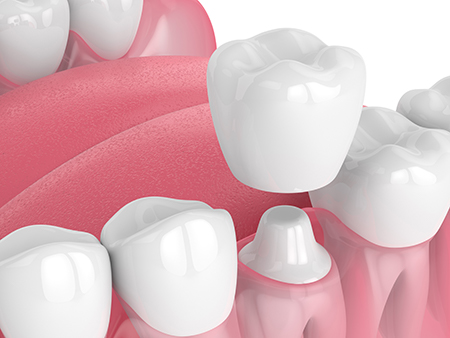
Our practice emphasizes careful planning and material selection to achieve predictable outcomes. We combine thorough diagnostic imaging with an understanding of occlusion and tooth anatomy so each crown supports comfortable function and long-term health.
Precision in tooth preparation, digital or laboratory fabrication, and meticulous cementation are the steps that determine how well a crown integrates with the mouth. We pay attention to margin integrity, contact points with adjacent teeth, and how the restoration affects the bite to minimize future complications.
Communication with the patient is also central: we review anticipated results, maintenance expectations, and signs to watch for that might require follow-up. That partnership helps maintain the crown’s performance and the patient’s satisfaction over time.

At our office, each crown is part of a broader plan to preserve oral health and restore confidence in a patient’s smile. We tailor treatments to individual needs rather than applying a one-size-fits-all solution, ensuring function and aesthetics are both addressed.
Horizon Palms Family Dentistry maintains a focus on modern materials and techniques so patients receive restorations that are attractive, biocompatible, and built to last. Our team stays current with industry developments to offer options that reflect best practices in restorative care.
If you are considering a crown or want to explore whether a ceramic restoration is the right choice for you, our staff will help you understand the process and make a plan that fits your oral health goals.
In summary, ceramic crowns provide a strong, natural-looking way to restore damaged teeth while preserving function and improving appearance. Contact us to learn more about how a ceramic crown can fit into your treatment plan and to discuss the best options for your smile.

Ceramic crowns are full-coverage restorations made from advanced dental ceramics that replace damaged tooth structure and restore function. They are metal-free alternatives to traditional crowns such as porcelain-fused-to-metal, offering improved translucency and color matching. Because modern ceramics combine aesthetic properties with high strength, they are suitable for many areas of the mouth.
Ceramic crowns resist staining and are biocompatible with soft tissues, reducing the risk of gray gum lines that can occur with metal-based restorations. They can be customized for shade, translucency, and surface texture to blend with adjacent teeth. Material choice and design determine the balance between durability and esthetics for each case.
A ceramic crown is recommended when a tooth has lost most of its structure and cannot be reliably restored with a filling. Common scenarios include large fractures, extensive decay, a failed or oversized filling, and teeth that require full coverage after root canal therapy. Crowns are also used to restore and protect abutment teeth for bridges and to finish restorations on dental implants.
Choosing a crown is often more conservative than extraction and replacement because the natural tooth root remains in place, helping preserve jawbone and occlusal relationships. We evaluate remaining tooth material, bite forces, and the tooth's position to determine whether a crown will provide better long-term function than other repairs. The decision balances longevity, protection of the tooth, and the patient's esthetic goals.
Common ceramic materials include lithium disilicate, high-translucency zirconia, and layered or veneered porcelain systems. Lithium disilicate offers an attractive combination of strength and translucency for front and premolar crowns, while zirconia provides superior fracture resistance for posterior restorations. Layered ceramic systems can produce very natural-looking results when esthetics are the primary concern.
Each material requires different amounts of tooth reduction and offers distinct trade-offs between durability and translucency. Material selection depends on where the crown will be placed, how much chewing force it will encounter, whether it will be on an implant, and the patient's expectations for appearance. Our recommendations aim to match the material to the functional demands and esthetic needs of the case.
Same-day ceramic crown workflows use digital scanning and in-office CAD/CAM milling to design and fabricate a restoration during a single appointment. The process begins with a thorough exam and a digital impression, followed by digital design of the crown and in-office milling from a ceramic block. After finishing and glazing, the restoration is tried in, adjusted for fit and bite, and then permanently cemented or bonded. This approach reduces the need for temporary crowns and multiple visits when appropriate.
When laboratory fabrication is preferred, a temporary crown protects the tooth while a dental technician uses advanced layering and staining to optimize esthetics. Either workflow can produce high-quality results; case selection guides whether same-day milling is appropriate. Horizon Palms Family Dentistry uses modern CAD/CAM and digital imaging to plan and deliver efficient, precise restorations when indicated.
Ceramic crowns recreate the appearance of natural teeth by mimicking enamel's optical properties, including translucency, light transmission, and surface texture. Modern ceramics scatter and transmit light in ways that produce depth and natural-looking color variations, helping the crown blend with adjacent teeth. Fine surface characterization, glazing, and polishing further enhance the lifelike appearance.
Technicians or in-office systems can layer or stain ceramics to reproduce subtle variations in shade and translucency found in natural dentition. Accurate shade selection, photographic records, and communication between the clinician and dental laboratory contribute to a seamless match. The result is a restoration that is difficult to distinguish from a natural tooth under normal circumstances.
Yes. With careful shade selection and margin design, ceramic crowns can match surrounding teeth and integrate smoothly with the gum tissue. Because ceramic crowns are metal-free, they avoid the dark marginal lines sometimes seen with metal-based restorations and are less likely to cause gum discoloration. Achieving a natural transition at the gumline depends on proper preparation, accurate impressions, and precise fabrication.
Dentists consider lighting, adjacent tooth color, and tooth translucency during shade selection to achieve the best match. In some complex cases, ceramic layering or customized staining may be used to fine-tune the esthetic outcome. Open communication about expectations and review of try-in restorations helps ensure patient satisfaction with the final appearance.
Treatment begins with a detailed exam, digital imaging, and a discussion of goals and material options. Local anesthesia is used to remove weakened enamel and shape the tooth so it can receive a crown, and any necessary root canal treatment or core build-up is completed beforehand. A digital impression or scan captures the prepared tooth and surrounding bite, which guides fabrication of the final crown. If the restoration is lab-made, a temporary crown protects the tooth until the final restoration is ready.
At placement, the dentist checks fit, contacts, and occlusion and makes any necessary adjustments before cementing the crown with a durable bonding agent. Patients may experience mild sensitivity or soreness for a few days as the gums adapt, which typically resolves with routine hygiene and over-the-counter care. At Horizon Palms Family Dentistry, our team provides clear aftercare instructions and schedules follow-up visits to ensure the restoration is functioning well.
Ceramic crowns can last many years when properly maintained, with typical lifespans often ranging from a decade to longer depending on material and conditions. Factors that influence longevity include the chosen ceramic, the amount of remaining tooth structure, the patient's bite forces, oral hygiene, and parafunctional habits such as grinding. Crowns on implants may experience different technical considerations that can affect lifespan compared with crowns on natural teeth.
Good oral hygiene, routine dental checkups, and prompt attention to any chips, looseness, or discomfort help extend a crown's service life. Addressing bruxism with a nightguard and avoiding repetitive stress from habits like biting hard objects also reduces risk of fracture. Regular professional cleanings and examinations allow the dentist to monitor margins, contacts, and opposing teeth to catch potential problems early.
Ceramic crowns are commonly used as the visible restoration on dental implants and as abutments for conventional bridges. When used with implants, the crown may be designed as cement-retained or screw-retained depending on retrievability, esthetics, and implant positioning. Bridges use crowns on abutment teeth to span missing teeth and restore chewing function and appearance.
Material choice for implant crowns and bridge abutments considers load distribution, access for maintenance, and how the restoration will be attached. Zirconia and high-strength ceramics are often selected for posterior implant crowns because of their fracture resistance, while lithium disilicate may be chosen where esthetics are more critical. A thorough treatment plan addresses implant angulation, occlusion, and prosthetic access to ensure a durable, maintainable restoration.
Potential complications include chipping or fracture, marginal leakage leading to recurrent decay, and sensitivity or discomfort related to occlusion. Crown failure can result from inadequate planning, incorrect material selection, or excessive biting forces that exceed the restoration's strength. Early diagnosis and intervention reduce the likelihood of more extensive problems.
Management options depend on the specific issue and may include occlusal adjustment, repair of minor ceramic defects, re-cementation, or fabrication of a new crown when necessary. Maintaining regular dental visits and following the clinician's care instructions help detect changes before they become significant. Careful diagnostic imaging, precise tooth preparation, and appropriate material selection minimize these risks from the outset.