Our Office
5909 South Congress Ave
Lake Worth, FL 33462
Existing Patients: (561) 967-6453
New Patients: (561) 203-0359
Emergency: (754) 800-1949
Fax: (561) 431-5866
Visit Us Online

Modern dentistry offers many reliable ways to replace teeth, and removable dentures remain one of the most adaptable solutions for restoring a complete, functional smile. With advances in materials and fabrication techniques, today’s dentures are more natural in appearance, more comfortable to wear, and better at supporting facial contours than ever before.
At Horizon Palms Family Dentistry, we focus on creating dentures that look and feel like a natural part of your mouth. Our approach combines careful clinical evaluation with thoughtful design so that each denture supports clear speech, efficient chewing, and a confident smile that fits your daily life.
We build treatment plans around your needs and preferences, balancing function and aesthetics while keeping maintenance and long‑term oral health in view. Whether you’re exploring a first set of dentures or replacing an older prosthesis, our goal is predictable, long-lasting results that help you feel comfortable and secure.
Losing one or several teeth affects more than the way you look. Gaps in the mouth can change how the remaining teeth bite together, which over time may alter chewing patterns and place extra stress on certain teeth and jaw joints. Those functional shifts can lead to discomfort and additional dental problems if they aren’t addressed.
Beyond function, missing teeth influence nutrition and social confidence. People with untreated tooth loss often avoid certain foods, which can reduce dietary variety and affect overall health. The emotional impact of visible gaps or cosmetic changes should not be underestimated — restorative dentistry aims to restore both oral function and personal confidence.
Replacing missing teeth as part of a planned, evaluated treatment strategy helps preserve jawbone health, maintain facial structure, and prevent unwanted tooth movement. Removable dentures are a time‑tested option that can accomplish these goals for many patients when designed and fitted carefully.
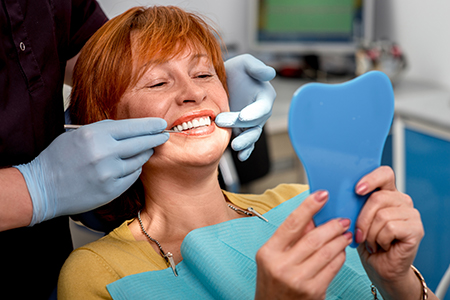
Dentures are prosthetic appliances that replace missing teeth and their immediate supporting structures. They sit on top of the gums and distribute chewing forces across the mouth while restoring tooth forms that help with speaking and smiling. The visible portion — teeth — can be customized for shape, color, and alignment to create a balanced, natural appearance.
Unlike permanent restorations such as bridges or single-tooth implants, removable dentures are taken out for cleaning and overnight rest. That removability makes them straightforward to maintain and allows easy inspection of the underlying tissues and any remaining teeth during routine dental visits.
Many patients benefit from dentures, including those who are missing multiple adjacent teeth or all teeth in an arch. A carefully planned denture can restore essential oral functions and improve quality of life; the right choice depends on the condition of the mouth, patient preference, and long-term goals for oral health.
Selecting a denture begins with a thorough clinical exam and discussion about daily habits, oral health history, and aesthetic priorities. We evaluate the remaining teeth, the condition of the gums and bone, and how the jaw moves to determine which type of prosthesis will deliver the best combination of comfort, stability, and appearance.
Removable prostheses fall into two broad categories: full (complete) dentures and partial dentures. Full dentures replace an entire upper or lower arch, while partial dentures fill gaps where some natural teeth remain. Each approach has variations designed to meet specific anatomic and functional needs.
Design choices — from base materials to the style of clasps or attachments — influence comfort and longevity. Today’s materials offer lighter, stronger frameworks and more lifelike tooth replacements than older designs, and modern techniques allow us to simulate natural tooth position and lip support for a more youthful, balanced facial profile.
Complete dentures are used when all teeth in an arch are missing or must be removed. The timing of denture fabrication affects fit: conventional full dentures are made after gums have healed following extractions, which helps ensure a precise fit once the tissues stabilize.
An immediate denture is placed at the time teeth are taken out so the patient does not go without teeth during healing. This approach preserves appearance and basic function right away, but as the gums remodel the denture often requires adjustments or a reline to maintain proper fit.
Immediate Denture
Immediate dentures allow for continuous tooth replacement when extractions are required. They are fitted before healing is complete, which means follow‑up visits are essential to adjust fit and comfort as the mouth changes.
Overdenture
Overdentures gain extra retention by using remaining tooth roots or specially designed attachments. By preserving some natural support, overdentures can improve stability and help preserve jawbone over time.
Implant-Supported Dentures
Implant-supported dentures secure to small titanium posts placed in the jaw, offering significantly greater retention than tissue‑borne dentures. When appropriate for a patient’s anatomy and goals, these hybrid solutions can greatly reduce movement and improve chewing confidence.
Partial dentures replace one or several missing teeth while relying on the remaining natural teeth for support. They restore chewing efficiency, close unwanted spaces, and help maintain the alignment of adjacent teeth so that bite problems are less likely to develop.
Partial frameworks can be crafted from cast metal, flexible resins, or newer hybrid materials to balance strength and aesthetics. Retention may come from discreet clasps or precision attachments that minimize visual impact while keeping the prosthesis secure during use.
When a partial denture is well designed, it becomes an unobtrusive and functional part of daily life, enabling patients to eat comfortably and speak clearly while protecting the long-term health of remaining teeth.
Our team takes care to match denture teeth to your facial characteristics and personal preferences so your restoration looks harmonious with your smile and overall appearance.
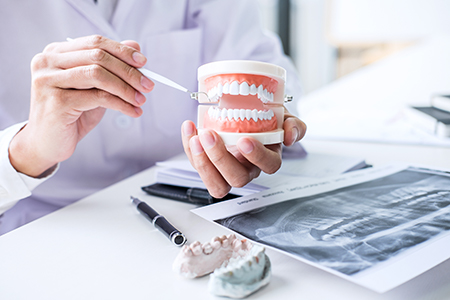
Crafting a dependable denture is a multi-step process that combines diagnostic imaging, careful impressions, and clinical trial fittings. Each stage allows us to refine how the appliance sits in your mouth, how your teeth meet, and how the denture supports your lips and cheeks for a natural profile.
Sometimes preliminary treatments — such as minor periodontal care, tooth extractions, or modification of the gum contours — are needed to create a stable foundation for the prosthesis. Addressing these issues before fabrication helps prevent irritation and improves long-term fit.
When implants are part of the plan, we coordinate surgical and restorative phases to place attachments in optimal positions for retention and function. Whether a denture is supported by tissue alone or enhanced by implants, careful planning and precise execution are the keys to comfort and performance.
Throughout the process we keep patients informed about what to expect at each visit and how adjustments will be handled, so there are no surprises and the final outcome meets both functional and cosmetic expectations.

Adjusting to a new denture is a gradual process. Early on, small sore spots and a change in saliva are common; these usually resolve with short-term adjustments and practice. Speaking and eating will improve over days to weeks as the muscles of the mouth learn to move with the new appliance in place.
Adjusting to wearing a new denture
Expect an adaptation period. We encourage wearing the denture during most waking hours at first so we can identify pressure points and make timely adjustments. Reporting any persistent discomfort helps us refine the fit quickly.
More saliva than usual
A temporary increase in saliva is a normal reaction to a new appliance and typically settles as you become accustomed to the prosthesis.
Speaking with ease
Practicing words aloud and reading passages helps accelerate adaptation. Most people regain comfortable speech within a few days to a couple of weeks.
Getting used to eating with a denture
Start with soft, easy-to-chew foods and cut items into small pieces. Chew slowly and use both sides of the mouth to stabilize the denture. Over time you’ll expand your food choices as confidence grows.
Taking care of your dentures
Rinse dentures after meals and brush them daily with a soft brush to remove plaque and stains. Use a cleaner recommended for denture care and soak them overnight to keep the base supple and hygienic.
Brush remaining natural teeth and gums daily. If you wear an upper denture, gently clean the roof of your mouth as part of your routine.
Remove dentures at night to allow the tissues to rest and to reduce the risk of irritation and infection.
Added stability
For patients who need extra retention, options such as denture adhesives, attachments, or implant support can improve stability and confidence when eating and speaking.
Follow-up care
Routine checkups allow us to monitor the fit and condition of your denture and to evaluate the health of your gums and any remaining teeth. Periodic relines or adjustments are a normal part of long-term care.
Relines
As jaw and gum contours change over time, relines help restore a snug, comfortable fit. We’ll recommend relining when we detect changes that affect function or comfort.
We take a careful, patient-centered approach to denture care and welcome questions about any part of the process. If you’d like to learn more about how a denture could restore function and confidence to your smile, contact us for more information.

Dentures are removable prosthetic appliances that replace missing teeth and the immediate supporting structures of the mouth. They rest on the gums and distribute chewing forces across a wider area to restore basic function for eating and speaking. Modern dentures are designed to replicate natural tooth shape, color, and alignment to support facial contours and a balanced smile.
Removable dentures are taken out for cleaning and overnight rest, which makes oral hygiene straightforward and allows routine inspection of the tissues beneath the appliance. Proper design and fitting help minimize movement and improve comfort during everyday activities. With careful fabrication and adjustments, dentures can provide predictable function and a natural appearance for many patients.
Good candidates for dentures include people who are missing multiple adjacent teeth or an entire arch, as well as those whose remaining teeth cannot be predictably restored. The decision depends on the condition of the gums and bone, the health of any remaining teeth, and the patient’s functional and aesthetic goals. Age alone is not a limiting factor; the key considerations are overall oral health and realistic expectations for what dentures can achieve.
A clinical exam and discussion about daily habits, medical history, and personal priorities are necessary to determine suitability. When appropriate, preliminary treatments such as periodontal care or extractions may be recommended to create a stable foundation. The right treatment plan balances comfort, longevity, and the patient’s long-term oral health goals.
Full or complete dentures replace all teeth in the upper or lower arch and are designed to restore appearance and chewing function when no natural teeth remain in an arch. Conventional full dentures are fabricated after the gums have healed following extractions, while immediate dentures are placed at the time of extraction to avoid a period without teeth. Material selection, tooth setup, and base design are tailored to achieve comfort and support for facial tissues.
Partial dentures replace one or several missing teeth while relying on remaining natural teeth for support and retention. Partials come in a variety of frameworks, including cast metal, flexible resin, and hybrid materials, and use discreet clasps or precision attachments to minimize visual impact. A well-designed partial helps maintain tooth alignment, restores chewing efficiency, and protects the long-term health of adjacent teeth.
Overdentures and implant-supported dentures offer enhanced retention by using preserved tooth roots, attachments, or dental implants for stability. Implant-supported options significantly reduce movement and improve chewing confidence for patients with adequate bone and suitable medical profiles. Selecting between tissue-borne, root-retained, or implant-retained designs depends on anatomy, function, and patient preferences.
The denture process begins with a comprehensive clinical exam, diagnostic imaging, and conversations about the patient’s goals and medical history. These steps allow the dentist to evaluate the condition of the gums, bone, and any remaining teeth and to recommend any preparatory treatments needed for a stable foundation. Treatment planning also includes selecting denture type, materials, and an anticipated sequence of appointments.
Fabrication involves precise impressions, bite records, and trial fittings to refine tooth position, bite, and aesthetics prior to final processing. Once the denture is delivered, follow-up visits are scheduled to adjust fit, relieve pressure points, and make any necessary relines. At Horizon Palms Family Dentistry, our team focuses on clear communication and careful adjustments so the final prosthesis meets functional and cosmetic expectations.
An immediate denture is a prosthesis placed at the same appointment as tooth extractions so the patient does not go without teeth during healing. This option preserves appearance and basic function immediately after extractions, which many patients find beneficial for social and nutritional reasons. Because the underlying tissues remodel as they heal, patients should expect follow-up visits to adjust the fit and comfort of the denture.
Immediate dentures are recommended when maintaining continuity of appearance is important and when the clinical situation allows for a predictable temporary prosthesis. Subsequent relines or conversion to a conventional denture made after tissue stabilization are common to restore optimal fit. The dentist will explain when an immediate approach is appropriate and outline the timeline for necessary adjustments and potential replacement.
Implant-supported dentures attach to dental implants anchored in the jaw, offering greater retention and stability than tissue-supported dentures. This increased support reduces movement during chewing and speaking and often improves patient confidence and comfort. Implants also help preserve jawbone by transmitting functional forces to bone, which can slow the bone loss that commonly follows tooth loss.
Choosing implant support requires evaluation of bone quantity and quality, overall health, and the patient’s treatment goals. When implants are part of the plan, surgical and restorative phases are coordinated to place attachments in optimal positions for retention and function. For many patients, implant-retained solutions offer a long-term improvement in stability compared with traditional removable dentures.
Daily care for dentures includes rinsing them after meals, brushing them with a soft denture brush or soft toothbrush, and using a cleanser formulated for denture hygiene. Soaking dentures overnight in a recommended solution helps keep the base supple and reduces bacterial buildup, while avoiding hot water prevents warping. Handle dentures carefully to avoid dropping them and rinse away food debris before brushing or soaking.
It is equally important to clean and protect any remaining natural teeth, gums, and oral tissues by brushing and flossing as recommended. Remove dentures at night to allow gum tissues to rest and to reduce the risk of irritation. Bring dentures to regular dental visits so the clinician can check fit, assess tissue health, and perform professional cleaning or adjustments when needed.
Adapting to new dentures usually involves a short period of increased saliva, minor sore spots, and changes in speech and chewing as oral muscles learn to work with the new appliance. These effects are typically temporary and improve with practice, such as reading aloud to regain speech patterns and starting with soft foods to build chewing confidence. Persistent pain or large pressure areas should be reported so the dentist can make targeted adjustments.
Wearing the denture during most waking hours at first helps identify areas of concern and accelerates muscle adaptation, while gradually increasing time with the appliance can speed comfort. Follow-up visits are an expected part of the process and allow the dental team to relieve pressure points, refine the bite, and reline the base if necessary. Clear communication with the dentist during this phase ensures a smoother transition to long-term use.
Dentures should be evaluated at regular dental checkups so the clinician can assess fit, wear, and the health of the supporting tissues. Routine appointments allow early detection of pressure areas, cracks, or changes in fit that can affect comfort and function. Even well-fitting dentures will require periodic attention as jaw and gum contours slowly change over time.
Relines are recommended when the internal surface of the denture no longer adapts closely to the tissues and causes looseness or instability. Repairs should be addressed promptly if a denture fractures or an attachment fails, because continued use of a damaged prosthesis can harm oral tissues. Your dentist will recommend an individualized schedule for evaluations and relines based on clinical findings and patient needs.
Maintaining oral health with dentures requires daily cleaning of the prosthesis and diligent care of any remaining natural teeth and soft tissues. Brush remaining teeth and gums twice daily, use fluoride toothpaste on natural teeth, and follow the dentist’s recommendations for periodontal maintenance and oral cancer screening. Regular dental visits provide professional monitoring of tissue health, early treatment of problems, and guidance on preserving long-term function.
Communicate changes in comfort, chewing ability, or tissue appearance promptly so adjustments or treatments can be made before small issues become larger concerns. Maintaining a balanced diet and practicing good oral hygiene help support the health of the mouth and any remaining teeth. If you have questions about denture care or need an assessment, the team at Horizon Palms Family Dentistry in Lake Worth can provide personalized guidance and ongoing support.