Invisalign® for Teens

Our Office
5909 South Congress Ave
Lake Worth, FL 33462
Existing Patients: (561) 967-6453
New Patients: (561) 203-0359
Emergency: (754) 800-1949
Fax: (561) 431-5866
Visit Us Online

An innovative, discreet, and effective system of care, Invisalign® treatment offers a cosmetic way to align your smile with minimal interference to daily activities.
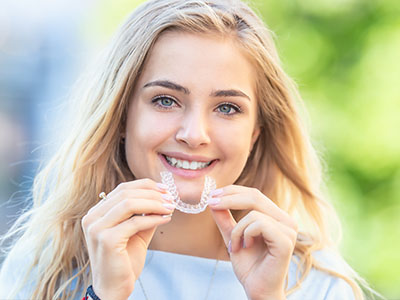
Invisalign® for Teens

Invisalign® for Brides

Invisalign® for Travelers
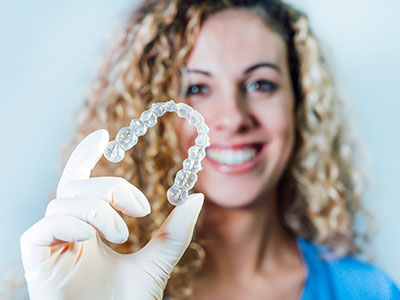
Before & After Photos
Invisalign® Videos
FAQs
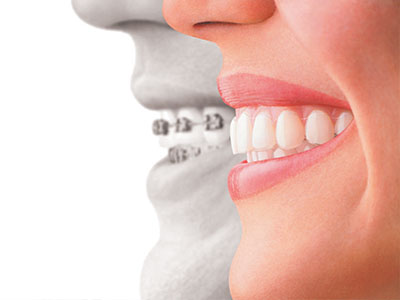
Invisalign® vs Braces
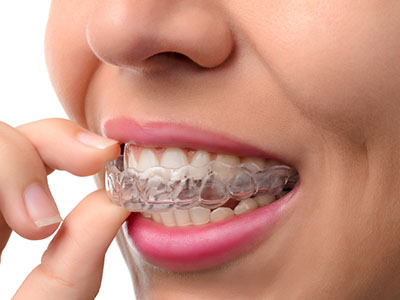
Invisalign® vs Direct-To-Consumer Aligners
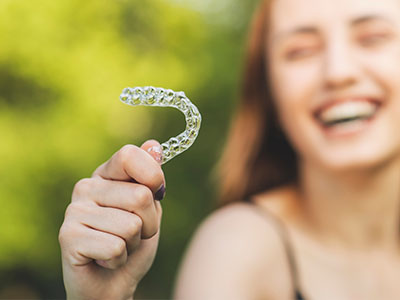
Is Invisalign® Right For Me?
Invisalign® Costs
With aligners that are practically invisible, only you will know that you're undergoing orthodontic care!
Invisalign® utilizes 3-D computer imaging technology to correct problematic bites or malocclusions by planning a complete sequence of custom-made clear aligners. This series of clear aligners incrementally move the teeth into place until the final desired corrections are reached.
As pioneers in the field of aligner development and technology, the folks at Align Technology, Inc. gather data from millions of treated smiles to design treatment systems that:
Custom-made to the exact specifications of your smile, Invisalign® clear aligners are designed to incrementally move your teeth into their correct positions over time. Simply swap-out last week's aligner for the next one in the series and watch as your smile progressively shows signs of improvement.
And, because Invisalign® clear aligners are removable for short periods of time, you can still enjoy the foods you love as well as brush and floss your teeth with ease!
Remember, a beautiful smile begins today! Contact our office for more information and to schedule a consultation for care.
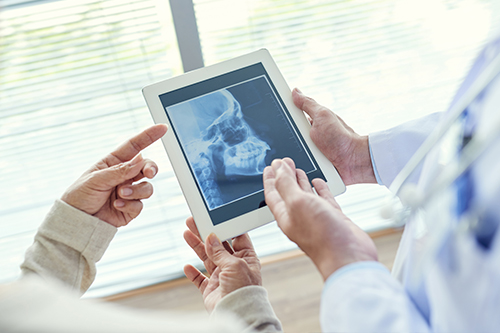
Your doctor will examine your teeth and show you what Invisalign® treatment can do for you.
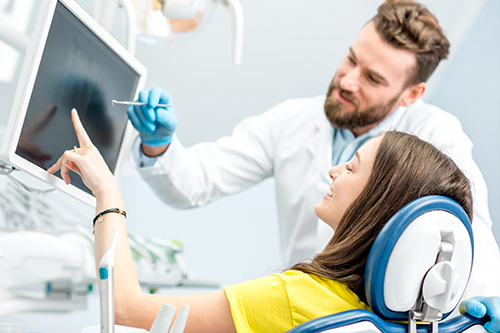
Start with a fast, precise digital scan. Then your doctor will map out a custom treatment plan just for you. You will even get a preview of your smile.
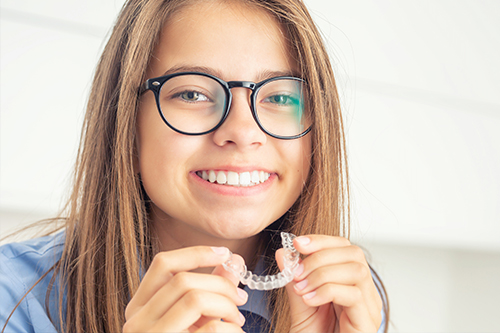
Your clear aligners are created using industry leading technology based on your customized treatment. Your aligners are created with comfort in mind.

From the first day of treatment to the last, you're never on your own — your doctor will be with you every step of your way.
Explore the true stories and journeys of several Invisalign® patients
*Invisalign® is a registered trademark of Align Technology, Inc.
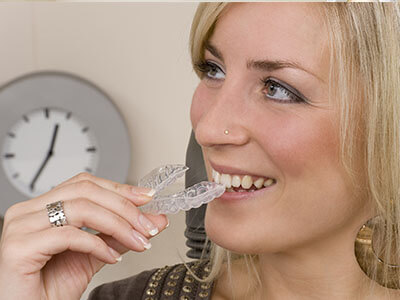
Invisalign® is a system of custom-made, clear thermoplastic aligners designed to move teeth incrementally into prescribed positions. The process begins with a digital scan or impression that is used to plan a complete series of aligners through 3-D treatment software. Each aligner in the series applies gentle, targeted pressure to teeth and is worn for a prescribed interval before switching to the next aligner.
The series is created to follow a step-by-step treatment plan that maps tooth movement from the starting position to the desired final alignment. Because the aligners are removable, patients can maintain their regular oral hygiene routine and eat without hardware-related restrictions. The technology allows dentists to preview the planned outcome and make adjustments before fabrication begins.
Good candidates for Invisalign® include adults and mature teenagers who have orthodontic issues such as mild to moderate crowding, spacing, certain bite misalignments, or relapse after prior orthodontics. A comprehensive dental exam and digital records help determine whether clear aligners are appropriate for an individual case. Some complex movements may still require traditional braces or adjunctive treatments, so clinical evaluation is essential.
Successful treatment also depends on patient cooperation, including wearing aligners for the recommended number of hours per day and following the clinician’s instructions. Prior to starting, active gum disease or untreated cavities should be addressed to ensure a healthy foundation for tooth movement. Your dentist will review medical and dental history to confirm that clear aligners are a safe and effective option.
The Invisalign® process at Horizon Palms Family Dentistry begins with a consultation and a fast digital scan to capture precise images of your teeth and bite. Those images are used to create a personalized treatment plan and a digital preview of expected tooth movement; once the plan is approved, a series of custom aligners is manufactured. The practice schedules periodic check-ins to monitor progress, make minor adjustments, and provide new aligners as directed.
Throughout treatment, the clinician communicates expected milestones and provides guidance on wear time, aligner care, and any auxiliary techniques such as attachments or elastics when needed. These routine appointments allow the team to verify that the teeth are tracking as planned and to recommend refinements if necessary. The office emphasizes a comfortable, supportive experience while maintaining clinical oversight of each case.
Treatment length with Invisalign® varies depending on the complexity of the case, the number of movements required, and patient compliance with recommended wear time. Many patients complete treatment within several months to a year, while more complex cases can take longer. Your dentist will provide a projected timeline based on your individualized treatment plan and digital simulation.
Regular follow-up visits help ensure the plan is on track and allow the provider to address any delays or make refinements. If additional movements are needed after the initial series, supplemental aligners or refinement phases may be prescribed to achieve the final result. Consistent wear and adherence to instructions typically correlate with more predictable timelines.
For optimal results, clinicians commonly recommend wearing Invisalign® aligners for about 20 to 22 hours per day, removing them only for eating, drinking (except plain water), and oral hygiene. Consistent wear ensures that teeth move according to the planned sequence and helps prevent delays in treatment progress. Missing extended wear periods can reduce the effectiveness of each aligner and may require adjustments to the plan.
Patients typically change to the next aligner in the series every one to two weeks, or according to the schedule provided by their dentist. Follow-up appointments are used to confirm progress and to provide the next sets of aligners. Your provider will give specific guidance tailored to your plan and monitor compliance as part of routine visits.
To keep aligners clear and hygienic, rinse them each time you remove them and clean them daily with a soft toothbrush and lukewarm water, avoiding hot water which can deform the plastic. Use gentle, nonabrasive cleaning methods and products recommended for clear aligners rather than abrasive toothpaste or whitening agents that can scratch or discolor the material. Regular cleaning helps prevent bacterial buildup and keeps the aligners discreet in appearance.
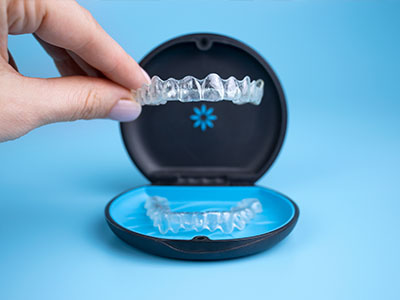
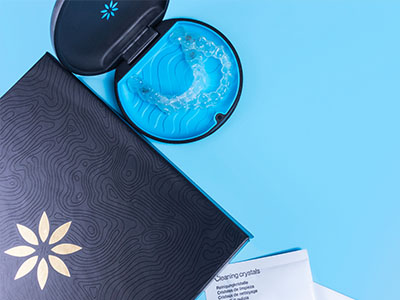
When not in use, store aligners in their protective case to prevent loss or damage and to avoid exposure to contaminants. Continue a thorough oral hygiene routine by brushing and flossing before reinserting aligners to reduce the risk of staining or decay. Bring your case and aligners to appointments so the team can inspect them and offer care tips if needed.
Many patients experience a brief adjustment period during which they may notice a mild lisp or slight change in speech as the tongue adapts to the presence of aligner material. This typically resolves within a few days to a couple of weeks as muscles and tongue posture adjust. Initial soreness or pressure is also common for the first few days after switching to a new aligner and is a normal part of tooth movement.
Aligners are generally designed for comfort, with smooth edges and no brackets or wires to irritate soft tissues. Over-the-counter pain relievers, soft foods for a short period, and routine care measures can help manage any transient discomfort. If persistent or severe soreness occurs, contact your dental provider for evaluation and guidance.
Attachments are small, tooth-colored bumps bonded to select teeth to provide aligners with a better grip and to guide complex movements such as rotations or vertical adjustments. They are placed during treatment and are designed to be discreet and functional without affecting daily activities. Attachments are planned as part of the digital treatment design and are removed once their role in the movement sequence is complete.
In some cases, additional techniques like elastics or interproximal reduction (IPR) may be recommended alongside attachments to achieve targeted results. Your dentist will explain the purpose of any adjunctive procedures and how they fit into the overall plan. All steps are intended to increase precision and predictability of tooth movement while maintaining oral health.
Invisalign® and traditional braces both move teeth effectively but differ in form and appliance management: braces are fixed to the teeth using brackets and wires, while Invisalign® uses removable clear aligners. Braces may be preferred for very complex tooth movements or certain bite corrections, while Invisalign® offers advantages in aesthetics and easier oral hygiene since aligners are removable. Advances in aligner technology have expanded the range of cases that clear aligners can address, but the suitability of either option depends on the specific clinical goals.
Decision-making is individualized and based on diagnostic records, treatment objectives, and patient preferences. Your dentist will review the benefits and limitations of each approach, explain what to expect during treatment, and recommend the option that best meets your functional and aesthetic needs. Ongoing communication ensures the chosen method aligns with long-term oral health priorities.
After active Invisalign® treatment, a retention phase is essential to maintain the new tooth positions and prevent relapse; this usually involves wearing a retainer according to the dentist’s instructions. Retainers may be removable clear retainers or fixed bonded wires, and the recommended schedule varies by case and the extent of prior movement. Regular dental checkups allow your provider to monitor stability and oral health following orthodontic treatment.
If minor adjustments are needed after the initial aligner series, refinement aligners can be prescribed to fine-tune results and ensure proper function and aesthetics. Your dentist will also discuss long-term retention strategies and periodic reviews to protect the investment of treatment. For patients treated in Lake Worth, the practice can schedule follow-up visits and provide guidance for ongoing maintenance.