Our Office
5909 South Congress Ave
Lake Worth, FL 33462
Existing Patients: (561) 967-6453
New Patients: (561) 203-0359
Emergency: (754) 800-1949
Fax: (561) 431-5866
Visit Us Online

If your dentist has recommended root canal therapy, try not to worry — this is one of the most common treatments used to relieve pain and preserve a natural tooth. Modern techniques and materials have made the procedure predictable and comfortable for most patients, and it’s often the best option to remove infection while keeping the tooth in place.
At Horizon Palms Family Dentistry, we combine careful diagnosis with gentle clinical skill to guide patients through treatment options. Our focus is on preserving oral function and comfort so you can return to eating, speaking, and smiling with confidence.
Keeping your natural tooth whenever possible preserves the normal bite and chewing function and helps maintain the surrounding jawbone and gum tissues. When a tooth’s inner tissues become infected or irreversibly damaged, treating the problem inside the tooth frequently avoids the need for extraction and a more complex replacement later on.
Root canal therapy is designed to remove diseased tissue from the tooth’s pulp chamber and root canals, then seal those spaces to prevent reinfection. With appropriate restoration afterward — typically a crown or a strong permanent filling — treated teeth can remain stable and functional for many years.
Although every case is different, clinicians rely on modern instruments, magnification, and biocompatible materials to improve outcomes and reduce discomfort. The goal is to restore health while minimizing disruption to your daily life.

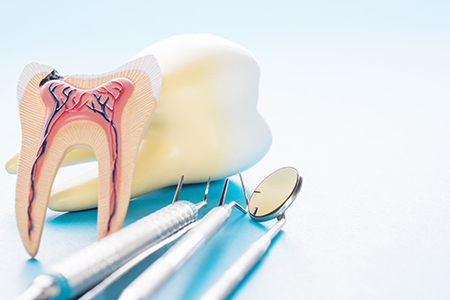
Inside each tooth there is a central chamber that contains the dental pulp — a network of nerves, blood vessels, and connective tissue that supports tooth development. Once a tooth is fully formed, the pulp is no longer essential for everyday function, but it can become injured or infected following deep decay, repeated dental work, or traumatic injury.
When bacteria reach the pulp, inflammation and infection can follow. That process produces symptoms ranging from mild sensitivity to severe pain, and if left untreated the infection can spread beyond the tooth into the surrounding bone and gum tissues. In those situations, root canal therapy removes the infected tissue, disinfects the internal spaces, and seals them to protect the tooth.
Not every tooth with sensitivity requires root canal therapy. A thorough exam, including digital x-rays and clinical testing, helps your dental team determine whether the pulp can be saved, needs treatment, or if an alternative approach is more appropriate.
Some symptoms are clear indicators of pulpal involvement, while others suggest that further evaluation is warranted. If you notice new or worsening signs, it’s best to schedule an appointment so the condition can be assessed before it progresses.
Pain that lingers, intensifies, or wakes you at night can signal that the nerve tissue inside the tooth is inflamed or infected. This kind of discomfort typically gets worse over time without treatment.
Brief sensitivity is common, but prolonged pain after exposure to hot or cold foods often points to significant nerve irritation or damage.
Pain under pressure can indicate that the inner tissues are compromised or that an infection has affected tissues around the root.
A tooth that becomes darker after an injury or over time can reflect internal changes in the tooth’s structure, sometimes associated with pulp damage.
Cracks and fractures may expose the pulp or allow bacteria to enter, increasing the risk that root canal therapy will be necessary to preserve the tooth.
Localized swelling or a draining sinus tract near the tooth often points to an underlying infection and should be examined promptly.
When infection reaches the supporting bone, it can weaken the structures that hold a tooth in place, which sometimes causes a tooth to feel mobile.

Some teeth in need of root canal therapy don’t cause obvious pain at first and are discovered during routine exams or on x-rays. Catching problems early often means simpler treatment and a better prognosis. If you wait until symptoms become severe, the infection can spread and the tooth or surrounding structures may sustain greater damage.
Dentists use a combination of visual inspection, digital imaging, and clinical tests to determine the extent of pulp involvement and to plan the appropriate treatment. In many cases, identifying the issue before it escalates preserves more of the natural tooth and reduces the chance of complications.
Prompt attention also reduces the likelihood that the infection will affect adjacent teeth or the jawbone. Addressing signs of pulpal disease early supports quicker recovery and long-term oral health.
Root canal therapy is performed under local anesthesia to keep you comfortable. After the area is numb, the dentist creates a small opening through the tooth to access and remove the diseased pulp. The canals are cleaned, shaped, and disinfected before being filled with a biocompatible material that seals the interior of the tooth.
Depending on the tooth’s complexity, treatment can often be completed in a single visit, though some teeth require multiple appointments to fully resolve infection and allow healing. After the internal work is finished, the tooth will need a permanent restoration — commonly a crown — to rebuild strength and restore normal function.
Recovery is typically straightforward. In the days after treatment you may notice tenderness around the treated tooth and surrounding tissues; this is a normal part of healing. Your dental team will give specific instructions to manage any discomfort and to support a smooth recovery.
After the appointment you may have lingering numbness for a short time. Avoid chewing until feeling returns to prevent accidentally biting your cheek or tongue.
Mild to moderate soreness can occur as the tissues heal. Over-the-counter pain relief is often sufficient, but your dentist will advise you if a prescription is needed.
If antibiotics are recommended, take the full course as directed to ensure the infection is controlled.
A tooth that has received a root canal can be more brittle until it receives its final restoration. Avoid hard or sticky foods and try to chew on the opposite side when possible.
Continue brushing and flossing to support healing and to protect the surrounding teeth and gums from further problems.
Placing the permanent crown or restoration in a timely manner helps restore strength and function and reduces the risk of fracture.
With proper care and the appropriate permanent restoration, teeth treated with root canal therapy often last many years — and frequently a lifetime. If you notice persistent pain, swelling, or any new concerns after treatment, contact the practice so we can evaluate and address the issue.
Horizon Palms Family Dentistry is committed to helping patients understand their options and feel comfortable throughout the treatment process. If you have questions about root canal therapy or would like more information about this treatment, please contact us for assistance.

A root canal, or root canal therapy, is a dental procedure that removes diseased or injured pulp from the inside of a tooth to relieve pain and stop infection. The dentist cleans and shapes the tooth's internal canals and then seals them with a biocompatible material to prevent reinfection. When possible, saving the natural tooth helps preserve normal chewing function and the surrounding jawbone.
Modern endodontic techniques, magnification, and local anesthesia make the procedure predictable and comfortable for most patients. After the internal work is complete, the tooth typically receives a permanent restoration such as a crown to restore strength and protect against fracture. Timely treatment often avoids extraction and more complex restorative work later on.
A tooth becomes a candidate for root canal therapy when the dental pulp is inflamed, infected, or irreversibly damaged by deep decay, repeated dental procedures, or traumatic injury. Bacteria that reach the pulp can cause persistent inflammation and infection that cannot heal on its own, so removing the pulp and disinfecting the canals is required to resolve the problem. Not every sensitive or aching tooth needs a root canal, which is why careful diagnosis is essential.
Diagnosis often includes a clinical exam, percussion and thermal testing, and digital radiographs to determine the extent of pulp involvement and bone changes. In some cases, a tooth may be monitored or treated conservatively if the pulp has a chance to recover. When infection or irreversible damage is present, root canal therapy is typically the conservative option to preserve the tooth.
Common signs that a tooth may need root canal therapy include persistent or severe toothache, lingering sensitivity to hot or cold, and pain when biting or chewing. Other indicators are tooth darkening, localized swelling or a pimple-like bump on the gum, and a tooth that feels loose or shifted in alignment. Some teeth with infected pulp cause little pain initially and are discovered during routine exams or on x-rays, which is why regular dental visits are important.
If you notice new or worsening symptoms it is best to schedule an evaluation so the condition can be assessed before it progresses. Early diagnosis often allows for a simpler procedure and a better long-term prognosis. Prompt attention also reduces the chance that infection will spread to adjacent teeth or the jawbone.
Root canal therapy is performed under local anesthesia to keep you comfortable and numb during the procedure. The dentist creates a small access opening in the tooth, removes the diseased pulp, and uses instruments and irrigation to clean and shape the internal canals. Once the canals are disinfected, they are filled with a biocompatible material that seals the spaces and prevents reinfection.
After the internal treatment, the tooth receives a temporary or permanent filling and most often needs a crown to restore full strength and function. Some teeth can be treated in a single visit while others require multiple appointments to allow infection to resolve. Your dental team will explain the best restoration plan to protect the treated tooth and support long-term success.
Most patients report that the root canal appointment itself is no more uncomfortable than receiving a routine filling because the area is numbed with local anesthesia. Many modern techniques and instruments reduce treatment time and sensitivity, and clinicians take care to make the experience as gentle as possible. It is common to feel some tenderness in the days following the procedure as the surrounding tissues heal.
Mild to moderate soreness can usually be managed with over-the-counter pain relievers and recommended home care, and your dentist will advise you if prescription medication is necessary. If pain intensifies or swelling develops after treatment, contact your dental team so the situation can be evaluated. With appropriate care and a timely permanent restoration, most patients recover quickly and return to normal function.
Immediately after treatment protect the numb area and avoid chewing on the treated tooth until feeling returns to prevent accidental injury. Expect some temporary soreness and manage it with recommended analgesics, ice to reduce swelling if present, and a soft diet for a few days. If antibiotics are prescribed for associated infection, take the full course exactly as directed to ensure proper healing.
Maintain meticulous oral hygiene by brushing twice daily and flossing gently around the treated tooth to support gum health and prevent new problems. Avoid very hard or sticky foods until the final restoration is in place, and schedule follow-up visits so your dentist can place the crown or permanent filling as recommended. Regular dental checkups and x-rays help monitor the treated tooth and address any concerns early.
The primary alternative to root canal therapy is extraction of the affected tooth, which eliminates the infected tissue but creates the need to consider tooth replacement options for function and esthetics. Other approaches, such as pulp capping or monitoring, may be appropriate in very specific, limited cases where the pulp has reversible inflammation rather than irreversible damage. The best option depends on the tooth's structural condition, the extent of infection, and the patient's overall oral health goals.
Extraction followed by a replacement like a dental implant or bridge restores function but typically requires additional procedures and time to complete. Your dentist will discuss the benefits and limitations of preserving the natural tooth compared with removal and replacement, helping you choose the option that best protects your long-term oral health.
With proper restoration and care, teeth that have undergone root canal therapy often remain functional for many years and can sometimes last a lifetime. The longevity of the treated tooth depends on factors such as the quality of the final restoration, the presence of fractures or cracks, oral hygiene, and ongoing dental care. Regular dental checkups and prompt attention to new symptoms help identify problems early and protect the treated tooth.
Teeth that receive crowns after root canal therapy are generally better protected from fracture and wear, which contributes to long-term success. If a treated tooth becomes reinfected or damaged, retreatment or endodontic surgery may be options to address the issue while still attempting to preserve the tooth. Your dental team will monitor the tooth and recommend appropriate steps to maintain its function and health.
You should seek urgent dental or medical care if you experience severe uncontrolled pain, rapidly increasing swelling of the face or jaw, difficulty breathing or swallowing, or a fever in combination with dental swelling. These signs may indicate a spreading infection that requires immediate attention to prevent serious complications. Trauma that causes a tooth to be displaced, cracked through to the root, or knocked out also warrants prompt evaluation.
For less severe but persistent pain, new draining sinuses, or changes in tooth color, schedule an appointment as soon as possible to prevent progression. Early diagnosis and treatment reduce the likelihood of more extensive damage and simplify restorative needs. Your dental team can prioritize urgent cases and guide you on when to come in for immediate care versus a scheduled visit.
At Horizon Palms Family Dentistry our approach combines careful diagnosis, modern technology, and a focus on patient comfort to guide treatment decisions for root canal therapy. Our team emphasizes conservative care that preserves natural teeth whenever clinically appropriate, and we use digital imaging and advanced instruments to improve precision and outcomes. We also coordinate with specialists when a case requires additional expertise to deliver the best possible results.
Your dental care plan will be tailored to your needs, with clear explanations of the procedure, recovery expectations, and the restoration required to protect the treated tooth. Follow-up visits and routine exams are part of our strategy to monitor healing and long-term function. If you have questions about root canal therapy or want to learn more about treatment options, our office can provide detailed information and clinical guidance.